

Redfin's October report had San Francisco's prices up 16.8%, the most of any big metro, and Austin's down 6.5%, the most of any. Chris argues San Francisco's jump is mostly a comeback from its COVID slump, with AI adding fuel, and the numbers mostly agree. Ryan tours the Bay Area's microclimates and micro-markets, and the hosts ask why companies keep leaving the place that keeps inventing the next ones. Then taxes: Texas taxes what you own and California taxes what you make, so we built the calculator they asked for.
In this episode
- Heating up, cooling offIn Redfin's October report, San Francisco's median sale price rose 16.8%, the most of the 50 largest metros and its most since 2018. Austin fell 6.5%, the most of any. The wider Bay Area rose only 3.6%.
- A comeback, not a boomSan Francisco's typical home is up 17% in a year but only 11% since February 2020, against 46% for the nation. Measured against the U.S., it's back to 4.1 times, its 2000–2012 average.
- Potential turning kinetic23 of 24 San Francisco ZIP codes lagged the Bay Area for years, and 20 are now catching up. Castro Valley, where Chris's house rose during COVID, is now falling back.
- Austin gave it backAustin is 27% below its 2022 peak and the cheapest against the U.S. since 2011. Homes take 85 days to sell and a quarter of listings have cut their price.
- Taxed on what you ownTexans pay about 1.49% of their home's value in property tax a year, Californians 0.70%, and since 2012 the typical Austin home's taxable value rose 2.3 times against 1.28 in San Francisco. On the same home, a married couple earning $140,000 pays more in Austin than in San Francisco, counting California income tax, once the home costs more than about $555,000.
First, the scandal
The tower that sank
Ryan asked the episode's hardest question: can San Francisco ever build its way out of a housing shortage? Does it have to go vertical, like Manhattan? Chris's answer was that "vertical's exponentially more expensive." The city already has a famous lesson in what vertical can cost.
The Millennium Tower at 301 Mission Street opened in 2009: 58 stories of condos, a $350 million project, and the first downtown high-rise in 20 years. Its 419 units sold for about $750 million. Its piles went 60 to 90 feet down into dense sand instead of the roughly 200 feet to bedrock. In 2016 residents learned it had sunk 16 inches and was leaning. By 2022 the lean measured 28 inches at the roof.
The lawsuits named almost everyone involved, and the developer blamed the transit center being dug next door. They ended in a settlement and a $100 million fix, $30 million of it from taxpayers through the transit authority. The fix had to be cut from 52 new piles to bedrock down to 18 after the work itself made the tower sink another inch. It was finished in 2023 and has taken back about 2 inches of the lean.
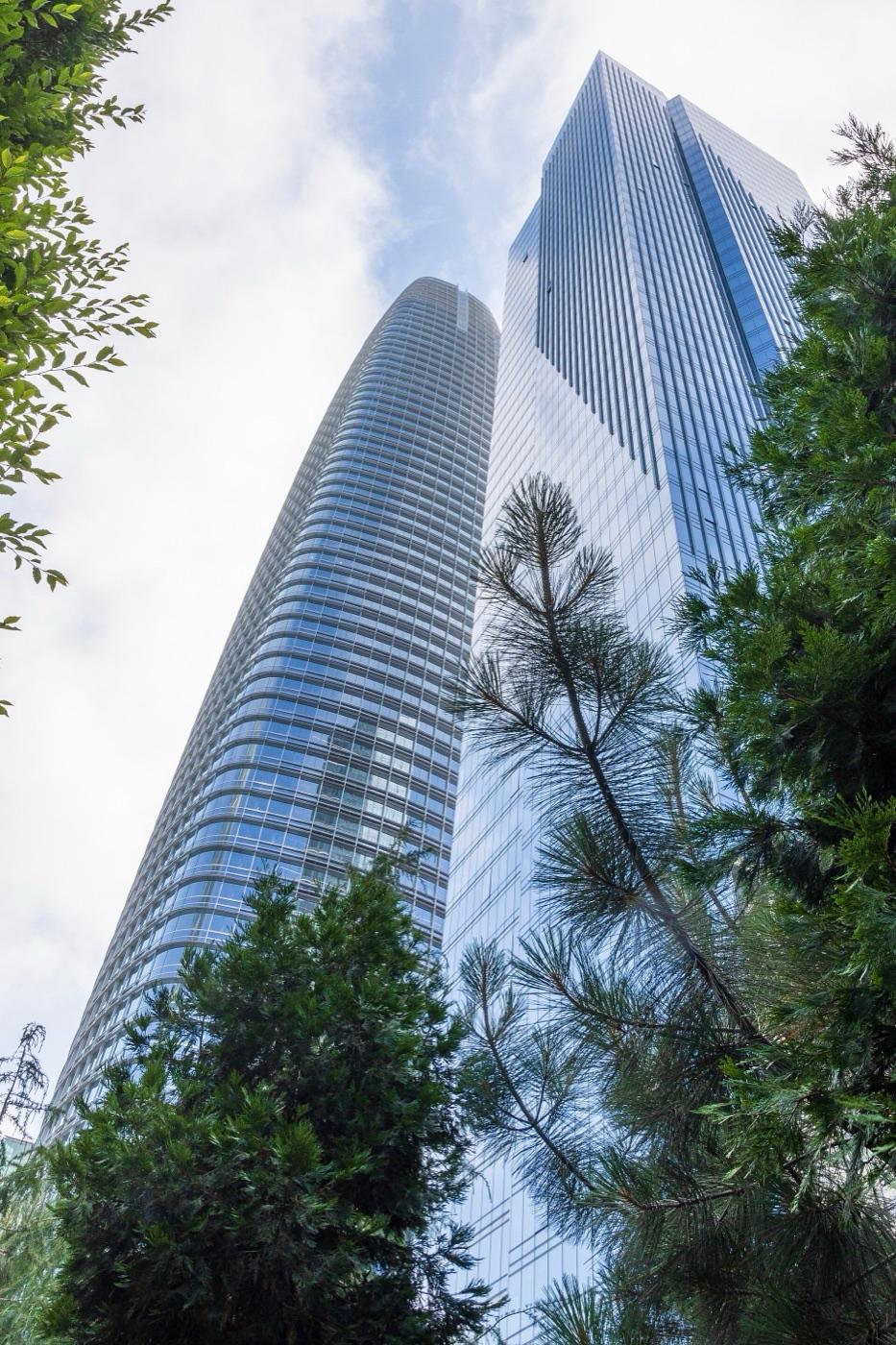
Photo: The wub, CC BY-SA 4.0
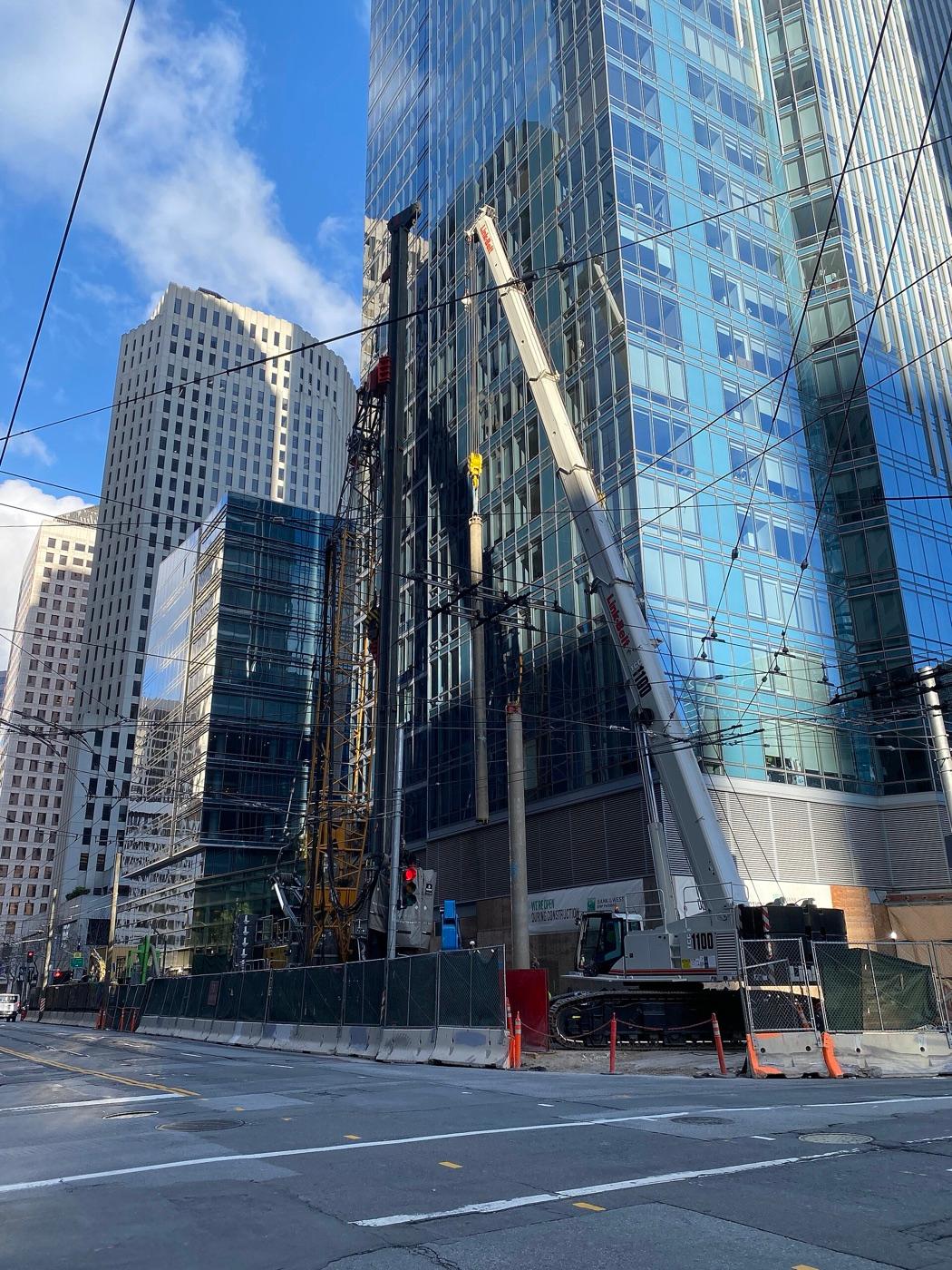
Photo: ArnoldReinhold, CC BY-SA 4.0
That's the economics Chris was describing. A tower that pencils has to sell to the top of the market, and anything else needs a subsidy. San Francisco permitted 770.0 new homes in 2024 and 1,444.0 in 2025, under two per 1,000 residents. Travis County, Austin's home county, permitted 15,059.0 in 2025, nearly 11 per 1,000.
A tale of two cities
Heating up and cooling off
What sparked the episode was Redfin's October report, published November 10. The median U.S. sale price fell for the first time in three years, down 0.4%. San Francisco led the 50 largest metros by a wide margin, up 16.8%, its biggest gain since 2018. Austin fell the most, down 6.5%.
Two tech towns, two directions. Ryan set the scene: San Francisco packs about 825,000 people onto a 47-square-mile peninsula, and Austin spreads just over a million across about 320 square miles. San Francisco is the establishment, with Silicon Valley money, venture capital and now AI. Austin is the challenger, a college and music town that became a magnet for headquarters and relocations.
San Francisco led and Austin trailed
Median sale price, change from a year earlier, October 2026
View as table
| Change in median sale price | |
|---|---|
| San Francisco | +16.8% |
| New Brunswick, NJ | +7.7% |
| New York | +4.4% |
| Nassau County, NY | +4.4% |
| United States | −0.4% |
| Nashville | −4.9% |
| Seattle | −5.1% |
| Austin | −6.5% |
San Francisco
- People, July 2025
- 826,000
- Land area
- 46.7 sq mi
- Typical home value
- $1.48M
- Change, 1 year
- +17.2%
- Change since Feb 2020
- +11.2%
- From its peak
- −0.7%
- Households that rent
- 62%
- Households with kids
- 18%
Austin
- People, July 2025
- 1,003,000
- Land area
- 326 sq mi
- Typical home value
- $489K
- Change, 1 year
- −2.9%
- Change since Feb 2020
- +22.3%
- From its peak
- −26.6%
- Households that rent
- 57%
- Households with kids
- 23%
Zillow's index for the city of San Francisco agrees with Redfin: up 17.2% in a year. But that is a city story more than a Bay Area story. Zillow's San Francisco metro, which adds the East Bay and Marin, is up only 3.6%, and Oakland is still 23.8% below its peak. HousingGauge's Bay Area region tracks the bigger area, so its page shows a calmer 7.7% gain for September.
| HousingGauge, week of Nov 9 | San Francisco Bay Area | Austin |
|---|---|---|
| Score | ||
| Market Opportunity Score | 30 RED | 50 YELLOW |
| Price | ||
| Median sale price, September | $1.22M | $415K |
| Change, 1 year | +7.7% | −0.6% |
| Price to income | 9.0× | 4.1× |
| Mortgage payment, share of income | 58% | 27% |
| Supply | ||
| Months of supply | 2.1 | 5.6 |
| Days on market | 20 | 85 |
| Sale price vs. list | 106.9% | 97.7% |
| Listings with a price cut | 15% | 25% |
| Demand | ||
| Rent, change in 1 year | +11.6% | −0.4% |
| Payroll jobs, change in 1 year | −1.7% | +0.4% |
| Homes permitted per 1,000 residents, 2025 | 1.7 (San Francisco County) | 10.8 (Travis County) |
Prices and supply: Redfin, September 2026. Incomes: Census ACS 2020–2024. Rents: Zillow. Jobs: BLS. Permits: Census via FRED. The Bay Area region is San Francisco, Oakland and San Rafael combined.
Two rows don't fit the boom story. Bay Area rents are up 11.6% in a year, but payroll jobs are down 1.7%. More money is chasing fewer homes, but it isn't coming from more jobs. Austin is the mirror image, with plenty of homes, 5.6 months of supply, a quarter of listings cutting their price, and 85 days to sell.
Fuel, not the lever
A comeback from a long way down
Redfin's explanation for San Francisco is AI money competing for scarce listings. Chris thinks AI is only part of it. "I actually think AI is playing a part, but it's not the big lever, honestly. I think AI is adding fuel." The fire was already going.
His case starts before COVID. He worked in the city when it was a boomtown, with cranes everywhere and BART so packed he sometimes rode the wrong direction just to get on a train coming back. Then COVID emptied it. The trains went quiet, restaurants closed, and the people who could work anywhere left for Austin, LA, Tahoe and the suburbs. Chris left for Dallas. The census caught it: San Francisco had 59,000 fewer residents in 2021 than in 2020, a 6.7% drop in one year.
Austin boomed while San Francisco slid, and now they're trading back
Zillow typical home value, 100 = February 2020, monthly
- San Francisco
- Austin
- United States
View as table
| Month | San Francisco | Austin | United States |
|---|---|---|---|
| Jan 2016 | 86.3 | 82.0 | 79.7 |
| Jan 2017 | 85.8 | 86.8 | 84.1 |
| Jan 2018 | 93.9 | 90.2 | 89.5 |
| Jan 2019 | 97.8 | 93.7 | 94.6 |
| Jan 2020 | 99.6 | 99.0 | 99.4 |
| Jan 2021 | 100.9 | 113.6 | 109.6 |
| Jan 2022 | 107.7 | 148.6 | 127.1 |
| Jan 2023 | 97.8 | 149.4 | 137.3 |
| Jan 2024 | 93.2 | 138.6 | 141.5 |
| Jan 2025 | 95.4 | 133.0 | 145.3 |
| Jan 2026 | 98.3 | 124.9 | 145.6 |
| Oct 2026 | 111.2 | 122.3 | 146.3 |
Seen from February 2020, the 17% jump looks different. San Francisco's typical home is up 11.2% in nearly seven years, against 46.3% for the nation. Had it kept pace with the country, it would be worth about $1.95M today instead of $1.48M. Austin is still up 22.3%, but it got there by rising 66% to mid-2022 and then giving back more than a quarter.
Chris's claim is that the city was oversold and "now it's catching back up to where it historically has been as a price, relative to these other markets." So measure it that way: San Francisco's typical home as a multiple of the typical U.S. home.
Measured against the nation, San Francisco is back to normal and Austin is cheap
Typical home value as a multiple of the U.S. typical home, monthly
- San Francisco
- Austin
View as table
| Month | San Francisco | Austin |
|---|---|---|
| Jan 2001 | 3.86× | 1.55× |
| Jan 2002 | 3.77× | 1.47× |
| Jan 2003 | 3.76× | 1.35× |
| Jan 2004 | 3.73× | 1.26× |
| Jan 2005 | 3.97× | 1.18× |
| Jan 2006 | 3.98× | 1.08× |
| Jan 2007 | 3.75× | 1.08× |
| Jan 2008 | 3.94× | 1.16× |
| Jan 2009 | 3.95× | 1.25× |
| Jan 2010 | 3.87× | 1.31× |
| Jan 2011 | 3.91× | 1.32× |
| Jan 2012 | 3.88× | 1.37× |
| Jan 2013 | 4.49× | 1.43× |
| Jan 2014 | 4.82× | 1.51× |
| Jan 2015 | 5.34× | 1.61× |
| Jan 2016 | 5.80× | 1.65× |
| Jan 2017 | 5.46× | 1.66× |
| Jan 2018 | 5.62× | 1.62× |
| Jan 2019 | 5.54× | 1.59× |
| Jan 2020 | 5.37× | 1.60× |
| Jan 2021 | 4.93× | 1.66× |
| Jan 2022 | 4.54× | 1.88× |
| Jan 2023 | 3.81× | 1.75× |
| Jan 2024 | 3.53× | 1.57× |
| Jan 2025 | 3.52× | 1.47× |
| Jan 2026 | 3.62× | 1.38× |
| Oct 2026 | 4.07× | 1.34× |
He's right about the direction. San Francisco ran at about 3.9 times the U.S. from 2000 to 2012, then at 5.6 times during the 2015–2019 tech boom. It fell to 3.5 times in March 2024 and is back to 4.07 times now. Whether that's still cheap depends on which past counts as normal. Against the 2000s, it's back to average. Against the boom years, it has more than a third to go.
Austin did the opposite. It went from 1.61 times the U.S. before COVID to 1.93 in May 2022. Today it's 1.34 times, the lowest since May 2011.
The AI part is real too. OpenAI's San Francisco offices now pass a million square feet, most of it in Mission Bay. Anthropic and Databricks are headquartered in the city, and Visa moved its headquarters to Mission Rock, next to Oracle Park, in 2024. When Ryan was in town recently for a game, Waymo and Zoox robotaxis were everywhere.
“I think it was too oversold, or not bought enough relative to those other markets, and now it's catching back up to where it historically has been as a price, relative to these other markets. And yes, I think AI is playing a part in that, adding additional logs to the already burning fire.”
Microclimates, micro-markets
Ryan's tour

Photo: Faisalmujib, CC BY-SA 4.0
Chris grew up in Texas, where Fort Worth is 95 and Dallas is 97 and that's the forecast for a few hundred miles. In the Bay Area he can board BART at 100 degrees in Pleasanton, step off at 70 in San Francisco, and ride on to 60 and drizzle in Daly City, all in under an hour. Karl the Fog comes in through the Golden Gate, so neighborhoods near the ocean stay gray while the Mission, a few miles east, is sunny and ten degrees warmer.
Prices work the same way. Ryan walked through the neighborhoods, from Pacific Heights' old money and mansions to the Marina's young professionals, the Mission and Dolores Park, North Beach's Little Italy and the Sunset. Then he went around the bay: Palo Alto and Stanford, Meta in Menlo Park, Google in Mountain View, Sausalito across the bridge, Oakland and Berkeley, Walnut Creek and Pleasanton. Here is each one.
| Place | Typical value | 1 yr | Since Feb 2020 | HousingGauge phase |
|---|---|---|---|---|
| Downtown and South of Market | ||||
| SoMa94103 | $845K | +11.4% | −16.3% | Turning up |
| South Park, Oracle Park94107 | $1.07M | +13.4% | −6.1% | Catching up |
| Financial District94111 | $1.16M | +11.6% | −4.4% | Catching up |
| Mission Bay94158 | $1.41M | +16.0% | +9.8% | Catching up |
| Ryan's neighborhoods | ||||
| Pacific Heights94115 | $1.63M | +20.7% | +10.1% | Catching up |
| Marina94123 | $2.72M | +23.1% | +15.5% | Catching up |
| Mission, Dolores Park94110 | $1.50M | +18.6% | +2.0% | Catching up |
| North Beach94133 | $1.46M | +17.7% | +0.8% | Catching up |
| Outer Sunset94122 | $1.82M | +18.6% | +21.2% | Catching up |
| Around the bay | ||||
| Palo Alto | $3.66M | +6.0% | +32.7% | – |
| Menlo Park | $2.95M | +10.6% | +29.8% | – |
| Mountain View | $1.96M | +2.0% | +22.0% | – |
| San Jose | $1.36M | −0.8% | +42.1% | – |
| Sausalito | $1.58M | +4.3% | +11.2% | – |
| Berkeley | $1.48M | +8.6% | +17.1% | – |
| Oakland | $718K | +1.5% | −7.5% | – |
| Walnut Creek | $994K | +1.3% | +29.5% | – |
| Pleasanton | $1.49M | −2.6% | +36.8% | – |
| Castro Valley | $1.08M | +1.3% | +34.5% | – |
Zillow Home Value Index, October 2026; neighborhoods by ZIP code, towns by city. Phase: HousingGauge's divergence reading for the ZIP code against the Bay Area, September 2026.
Two things stand out. First, the jump is everywhere in the city: 23 of the 24 residential ZIP codes are up at least 10% in a year. But 8 of them, mostly downtown, South of Market and Nob Hill, are still below February 2020. That includes 94107, around Oracle Park, where Chris works. The family neighborhoods on the west side are 10% to 23% above it.
Second, HousingGauge's divergence page already has a name for this. It compares each ZIP code with its own region over five years. All 24 of those San Francisco ZIP codes trailed the Bay Area, 23 of them by enough to count as long laggards. Today 20 are "catching up," meaning they've kept pace with the region or beaten it two years running, and 3 more have just turned up. In Episode 4's terms, the city's potential energy is turning kinetic, which is what Chris said on air. His own example sits on the other side. During the same COVID years, he said, his house in Castro Valley doubled. Castro Valley's two ZIP codes beat the region by 15.2% and 24.1% over five years, and HousingGauge now has both as leaders falling back: 94552 "turning down" and 94546 "losing ground."
“That's pent-up potential energy for San Francisco that you're seeing now, coming back. A market like San Francisco can only go down so much, because you can't make more San Franciscos.”
Left brain, right brain
Why people pay more than the math says
If people only used the logical side of their brain, Chris said, very few would live in San Francisco. It makes more sense to move to Dallas. But people also have the other side: "I want to live here, and I'm going to do what I have to do to live here." San Francisco attracts those people. So do New York, Paris and London. On a consulting job in Budapest years ago, Chris noticed that the ambitious twenty-something at the next computer had one picture up: the Golden Gate Bridge.
The ones who stay manage both sides. They want the fog rolling in with their morning coffee and the chance meeting that turns into a deal five years later. Then they do the arithmetic and the work. The rest come for a few years and leave. All of that pushes prices above incomes, and Chris asked for exactly this chart: home prices against incomes, over time, in both places.
San Francisco has cost 9 to 13 years of income for a quarter century
Typical home value divided by median household income, yearly
- San Francisco County
- Travis County (Austin)
- United States
View as table
| Year | San Francisco County | Travis County (Austin) | United States |
|---|---|---|---|
| 2001 | 9.65× | 4.12× | 3.18× |
| 2002 | 10.15× | 4.23× | 3.38× |
| 2003 | 11.26× | 4.32× | 3.57× |
| 2004 | 12.57× | 4.40× | 3.81× |
| 2005 | 13.21× | 4.26× | 4.08× |
| 2006 | 12.22× | 4.16× | 4.24× |
| 2007 | 11.87× | 4.16× | 4.09× |
| 2008 | 10.44× | 4.06× | 3.74× |
| 2009 | 9.74× | 4.06× | 3.52× |
| 2010 | 9.44× | 4.12× | 3.41× |
| 2011 | 9.05× | 3.91× | 3.20× |
| 2012 | 9.18× | 3.73× | 3.12× |
| 2013 | 10.38× | 3.94× | 3.26× |
| 2014 | 10.96× | 4.31× | 3.39× |
| 2015 | 11.87× | 4.52× | 3.44× |
| 2016 | 11.29× | 4.52× | 3.53× |
| 2017 | 10.81× | 4.56× | 3.57× |
| 2018 | 11.72× | 4.52× | 3.70× |
| 2019 | 10.66× | 4.43× | 3.66× |
| 2020 | 11.00× | 4.69× | 3.80× |
| 2021 | 11.53× | 5.93× | 4.22× |
| 2022 | 10.57× | 6.28× | 4.52× |
| 2023 | 10.11× | 5.55× | 4.46× |
| 2024 | 9.17× | 5.27× | 4.39× |
On air Chris guessed San Francisco homes cost "more than seven times" people's earnings, and said that seemed low. His instinct was right. San Francisco County averaged 11 times income from 2001 to 2019. In 2024 it was 9.2, the lowest since 2011. With today's prices and 2024 incomes it's about 10.8, back near average. For HousingGauge's whole Bay Area region it's 9.0.
Travis County is the one that broke pattern. It sat between 3.7 and 4.7 times income for twenty years, jumped to 6.3 in 2022, and was back to 5.3 in 2024. The romance premium in San Francisco has been steady for 25 years. Austin's spike was the exception.
Where companies start
Zero to one, then off to Texas
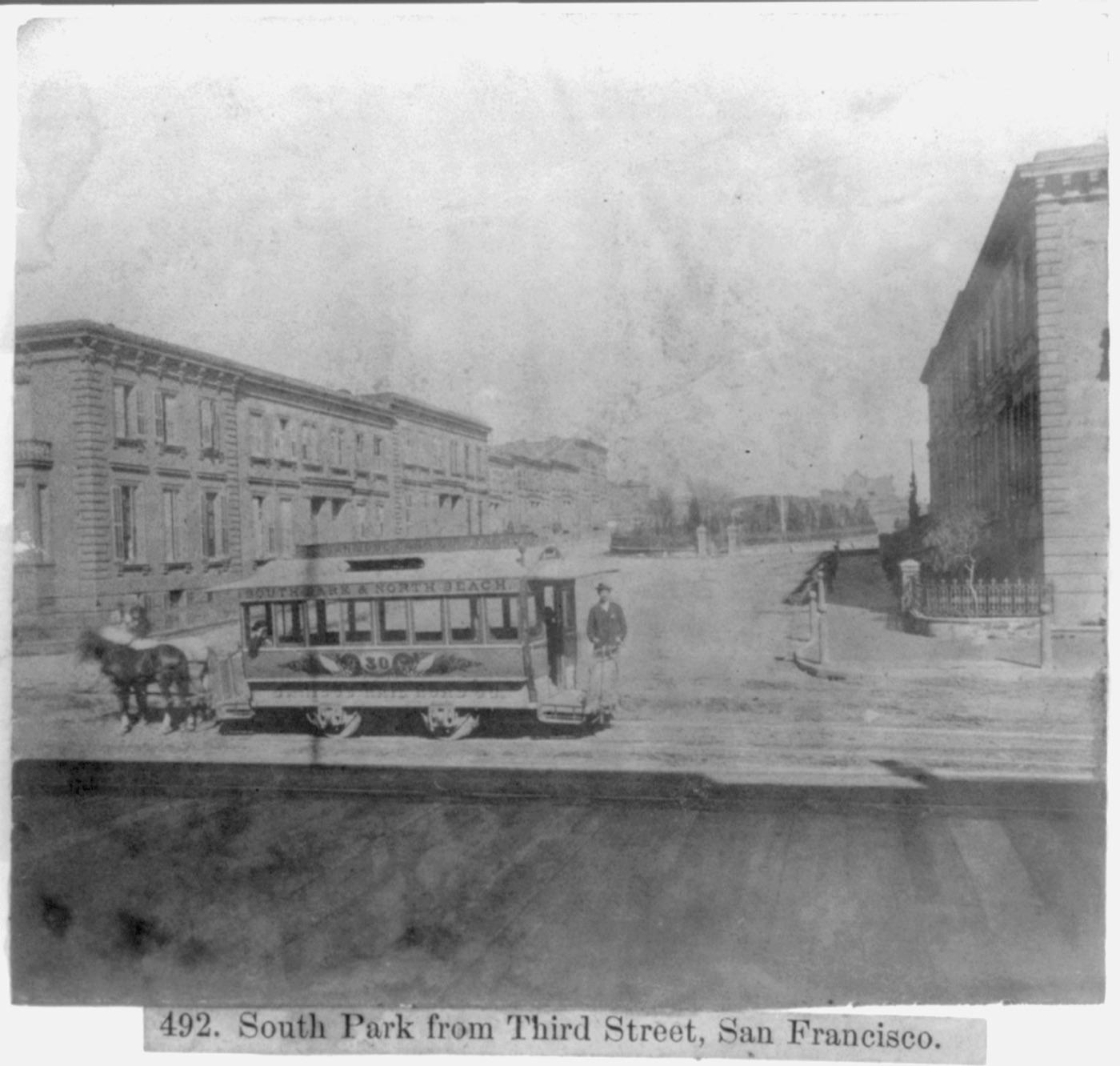
Photo: Lawrence & Houseworth, Library of Congress, Public domain
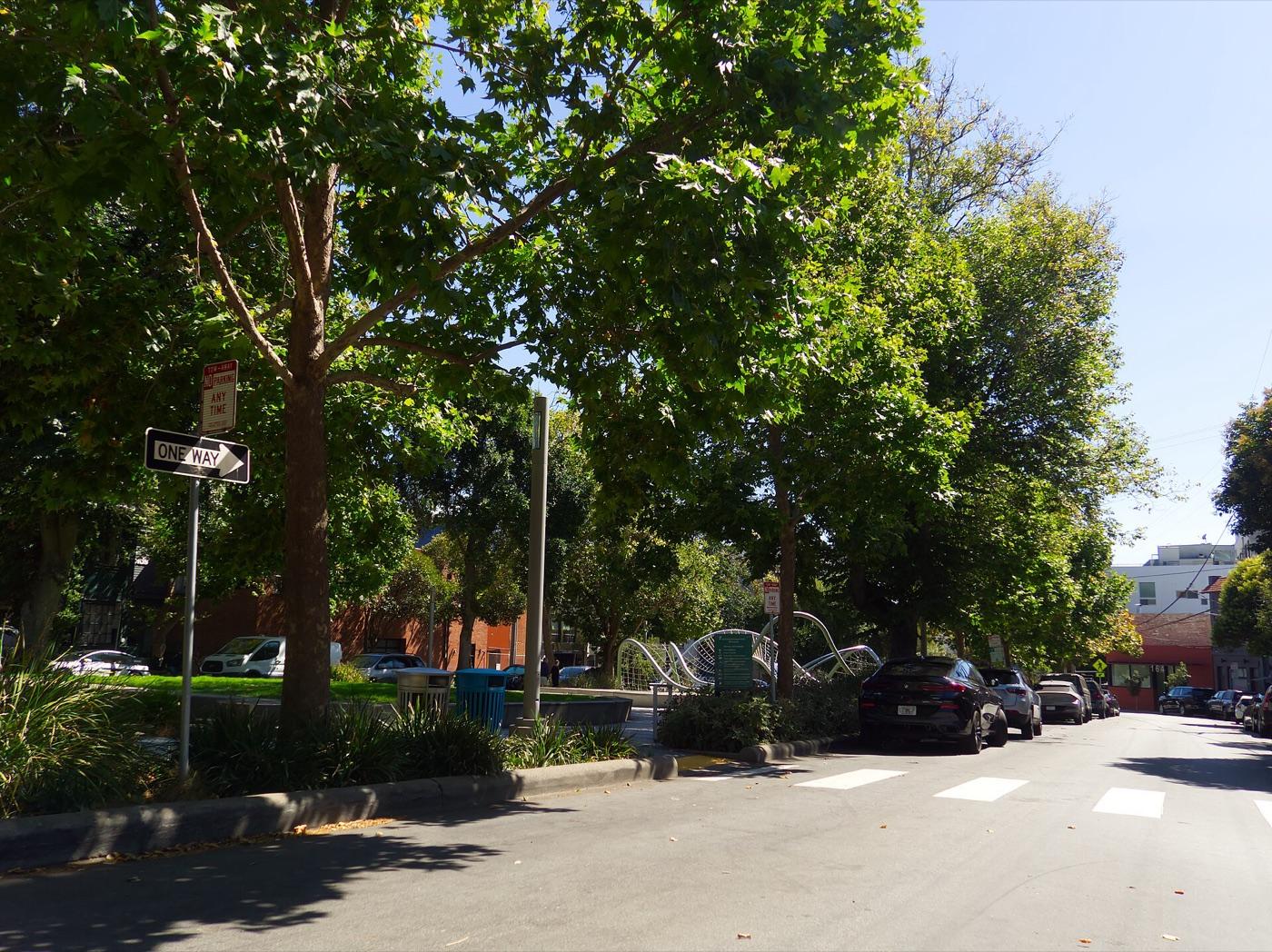
Photo: Lexi Mattick, CC BY 4.0
Walking to work, Chris finally read a plaque he'd passed a hundred times. Twitter and Instagram both came out of one small building on South Park, less than a block from his office. That's 164 South Park, about 7,400 square feet on two floors. Twitter started there inside Odeo, and Instagram moved into Twitter's old office a month after it launched. Open doors on the same street show Y Combinator and corporate venture signs. "Everybody is thinking about what is the next thing."
That's his answer to the headlines about companies leaving California. Ryan listed them: Tesla, Oracle and Twitter all moved headquarters to Texas, and Charles Schwab moved to the Dallas area. Chris's point, which he admitted hurts to say as a University of Texas grad, is that companies leave once they need to scale, because scaling in the Bay Area is too expensive. Tesla moved its headquarters from Palo Alto to Austin in 2021 and builds cars at Giga Texas, but it opened a global engineering headquarters back in Palo Alto in 2023. Oracle moved to Austin in 2020 and said in 2024 it is moving on to Nashville. A friend of Chris's took a job at Facebook's big new office in downtown Austin, and the work turned out to be reviewing flagged photos.
"You're always gonna see people moving out once they've made it," Chris said, and you're always going to see names nobody has heard of yet. Five years ago few people had heard of OpenAI. San Francisco makes most of its money on zero to one, the brand-new ideas, and Texas wins the jobs that come after. Austin has plenty of zero to one too. It just isn't as dense.
Austin, Texas
Silicon Hills, with the brakes on
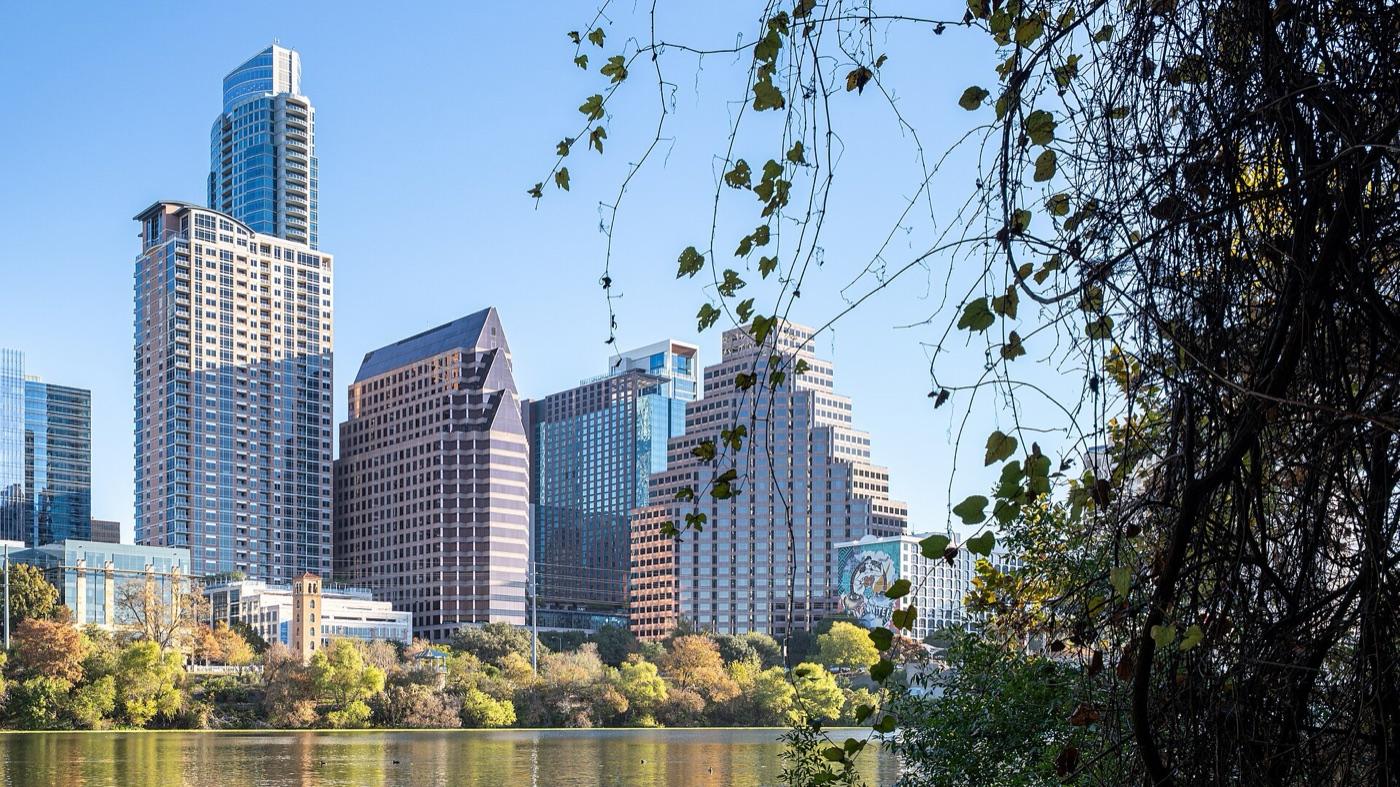
Photo: ajay_suresh, CC BY 4.0
Chris went to UT when people called Austin Silicon Hills, and the skyline he knew in college is unrecognizable. He'd still pick the Bay Area if price didn't matter, for the hiking, the surfing, the transit, and summers that don't reach 110. But during COVID, price was the whole pitch. Sell in San Francisco, buy a bigger house at half the price in Austin. A lot of people did that without reading the fine print on taxes.
Now Austin is rebalancing, in Chris's words. Prices got "probably irrationally high," competing with California prices while paying double the taxes. The bust has reached almost every neighborhood: 32 of Austin's 43 ZIP codes are down on the year. The steepest fall from the peak is in 78725, Del Valle, the ZIP code of Tesla's Gigafactory. Only the established west side is holding up.
| Place | Typical value | 1 yr | From the 2022 peak |
|---|---|---|---|
| Close in | |||
| Downtown78701 | $648K | −3.5% | −26.4% |
| East Austin78702 | $540K | −4.4% | −31.9% |
| South Austin, Bouldin78704 | $718K | −1.0% | −28.9% |
| Tarrytown78703 | $1.32M | +4.3% | −17.9% |
| Northwest Hills78731 | $1.03M | +3.6% | −16.0% |
| Farther out | |||
| Del Valle, by Tesla's Gigafactory78725 | $258K | −7.5% | −35.6% |
| Southeast Austin78744 | $312K | −5.6% | −31.6% |
| North Austin78753 | $323K | −4.3% | −29.9% |
| Suburbs | |||
| Round Rock | $389K | −5.0% | −26.3% |
| Cedar Park | $452K | −3.0% | −25.2% |
| Pflugerville | $358K | −4.7% | −28.0% |
| Leander | $412K | −5.2% | −29.6% |
| Kyle | $290K | −5.5% | −30.3% |
| Manor | $306K | −6.4% | −31.5% |
Zillow Home Value Index, October 2026; neighborhoods by ZIP code, suburbs by city. Every place listed peaked in June or July 2022.
HousingGauge reads Austin YELLOW at 50 this week, well ahead of the Bay Area's RED 30. Austin homes are cheap against local incomes and the price cuts are piling up, while the Bay Area's payments take more than half a typical income. Ryan wants a whole episode on Austin, its downtown, its suburbs and its taxes. Chris suggested pairing it with Boston, or with North Carolina's Research Triangle.
Show notes
Taxed on what you own, or on what you make
The best idea of the episode was a feature request. Chris argued that Texas runs what amounts to a wealth tax through property taxes, while California taxes income and, thanks to Proposition 13, taxes a home you've owned for years lightly. "People say I'm gonna move to Texas and pay so few taxes. Well, that's true if you don't buy a big property." Ryan asked for a calculator on the site: today's payment, then the payment twenty years on as taxes catch up. "Call it 2050."
- Texas, typical tax paid
- 1.49%
- of home value a year
- California, typical tax paid
- 0.70%
- of home value a year
- Austin rate, 2026
- 2.12%
- five taxing units, before homestead exemptions
- San Francisco rate, 2026–27
- 1.18%
- of the price paid, which rises with inflation, 2% a year at most
The "double" holds up. The typical Texas homeowner pays about 1.49% of the typical home's value in property tax each year, and the typical Californian about 0.70%. That's a little more than twice as much. For a new buyer the gap is smaller. Austin's five taxing units charge 2.12% of value in 2026, and the homestead exemptions bring that down to about 1.6% on a $415,000 home and 1.8% on a $1 million one. San Francisco charges 1.18% of the price you paid, less a $7,000 homeowners' exemption.
The bigger difference is what happens next, and Chris lived it. A Texas homestead is reappraised at market value every January, and the taxable value can rise up to 10% a year. In California, Prop 13 raises the purchase price by the state's inflation factor, capped at 2%. That factor has averaged 1.8% a year since 1976 and 1.6% since 2010. Here is the typical home in each city, bought in January 2012 and still owned.
| Bought January 2012 | Market value now | Taxable value now | Highest taxable |
|---|---|---|---|
| AustinTaxed on market value | 2.25× | 2.30× | 2.55× (2024) |
| San FranciscoTaxed on price paid, plus Prop 13 | 2.41× | 1.28× | 1.28× (2026) |
Multiples of the 2012 purchase price; market value as of October 2026, taxable value as of the 2026 assessment. Zillow Home Value Index for each city stands in for the appraisal; Prop 13 factors from the California State Board of Equalization. Rates changed too: Texas cut school tax rates and raised the school homestead exemption from $25,000 to $40,000 in 2022, $100,000 in 2023 and $140,000 in 2025, so Texas bills grew somewhat less than taxable value.
Both homes about doubled or better in value. The Austin owner's taxable value went right along with it. The San Francisco owner's rose 28% in 14 years, less than inflation. The 10% cap also stretches a boom out. For an Austin owner who bought in 2016, the taxable value rose the full 10% at the 2021, 2022 and 2023 appraisals and was still rising in January 2024, a year and a half after prices peaked.
Prop 13 is also where Chris's 30-year point comes from. Take the typical San Francisco home bought in June 2012 for about $651K. Its taxable value has risen to about $835K, so the tax is about $9,800 a year on a home Zillow now puts at $1.48M. Taxed on that full value at San Francisco's 2026–27 rate, it would be about $17,400. At Austin's 2026 rates, with a homestead, about $26,900. That's why sitting still in California can be cheaper than moving, and why Californians think of their house as their 401(k).
Austin or San Francisco: the house payment and the state and local taxes
The median-priced home in each place, with San Francisco's tax rules for the California home. Other Bay Area counties' rates and parcel taxes differ.
| Per month | Austin, 2026 | San Francisco, 2026 | Austin, 2050 | San Francisco, 2050 |
|---|---|---|---|---|
| Mortgage, principal and interest | $2,233 | $6,566 | $2,233 | $6,566 |
| Property tax | $550 | $1,194 | $1,325 | $1,925 |
| Total | $2,783 | $7,760 | $3,559 | $8,491 |
| Per year | Austin, 2026 | San Francisco, 2026 | Austin, 2050 | San Francisco, 2050 |
|---|---|---|---|---|
| Property tax | $6,599 | $14,333 | $15,904 | $23,104 |
| State income tax | None | $632 | None | $7,233 |
| Total | $6,599 | $14,965 | $15,904 | $30,337 |
Property tax in 2050 compared with 2026: Austin 2.4×, San Francisco 1.6×, before inflation. In 2026 this household itemizes on its California return: $83,414 of mortgage interest and property tax, against a $11,800 standard deduction. State income tax is a tax on pay, not a cost of the house; it is here because Texas doesn't charge one.
- Austin
- San Francisco
View as table
| Year | Austin | San Francisco |
|---|---|---|
| 2026 | $2,783 | $7,760 |
| 2027 | $2,805 | $7,784 |
| 2028 | $2,827 | $7,809 |
| 2029 | $2,851 | $7,834 |
| 2030 | $2,875 | $7,859 |
| 2031 | $2,899 | $7,885 |
| 2032 | $2,925 | $7,912 |
| 2033 | $2,951 | $7,939 |
| 2034 | $2,978 | $7,966 |
| 2035 | $3,006 | $7,994 |
| 2036 | $3,035 | $8,023 |
| 2037 | $3,065 | $8,052 |
| 2038 | $3,096 | $8,082 |
| 2039 | $3,128 | $8,113 |
| 2040 | $3,162 | $8,144 |
| 2041 | $3,196 | $8,176 |
| 2042 | $3,231 | $8,208 |
| 2043 | $3,267 | $8,241 |
| 2044 | $3,305 | $8,274 |
| 2045 | $3,344 | $8,309 |
| 2046 | $3,384 | $8,344 |
| 2047 | $3,426 | $8,380 |
| 2048 | $3,469 | $8,416 |
| 2049 | $3,513 | $8,453 |
| 2050 | $3,559 | $8,491 |
| 2051 | $3,606 | $8,530 |
| 2052 | $3,655 | $8,569 |
| 2053 | $3,705 | $8,609 |
| 2054 | $3,757 | $8,650 |
| 2055 | $3,811 | $8,692 |
| 2056 | $1,633 | $2,169 |
| 2057 | $1,691 | $2,213 |
| 2058 | $1,750 | $2,257 |
| 2059 | $1,811 | $2,302 |
| 2060 | $1,875 | $2,348 |
Mortgage principal and interest, property tax and any costs added below. The mortgage ends after 2055. Shown in the dollars of each year, not adjusted for inflation.
Assumptions, values and what's modeled
| Value | Austin, 2026 | San Francisco, 2026 | Austin, 2050 | San Francisco, 2050 |
|---|---|---|---|---|
| Market value | $415,000 | $1,220,000 | $904,598 | $4,213,478 |
| Appraised or assessed value (after caps) | $415,000 | $1,220,000 | $904,598 | $1,962,293 |
| Taxable value (after exemptions) | $275,000 | $1,213,000 | $764,598 | $1,955,293 |
Austin's taxable value is shown for the school district, which has the highest rate; the city, county, Central Health and community college each apply their own exemption.
Updated November 17, 2026. The calculator now uses 2026 tax rates, lets California itemize mortgage interest and property tax, keeps appreciation, income growth and inflation separate, and compares either the actual median homes or the same home in both places. The figures on this page were recalculated; earlier versions used 2025 rates and California's standard deduction.
Defaults. Ryan's $140,000 household income, married filing jointly. HousingGauge's September median sale prices: $415,000 for the Austin metro and $1,220,000 for the Bay Area, taxed under San Francisco's rules. Home prices grow at each metro's pace on Zillow's index since 2000 (Austin 3.3%, Bay Area 5.3% a year). Income grows 2.8% a year, the U.S. median household income's pace since 2000 (Census). Inflation is 2.6% a year, the consumer price index's pace since 2000 (BLS). The 30-year fixed rate is 7.11% (Freddie Mac, November 12), with 20% down, and the purchase closes on January 1, 2026.
Modeled.
- Mortgage principal and interest on a fixed-rate loan: the same every month for 30 years, then zero.
- Austin: each of the five taxing units applies its own homestead exemption to the appraised value, and a homestead's appraised value can rise at most 10% over the year before. A rental gets neither. Rates and exemptions stay at 2026 levels; in reality they change every year and are not capped.
- San Francisco: Proposition 13 taxes the purchase price, raised each year by inflation up to 2% and never above market value, less the $7,000 homeowners' exemption for an owner-occupant.
- California income tax on wages: 2026 brackets and standard deduction for the filing status, personal and dependent exemption credits, and itemized deductions for mortgage interest (on up to $1 million of debt) and property tax when they beat the standard deduction, with the high-income limits on both, plus the 1% tax on taxable income over $1 million. Brackets and deductions rise with inflation; deductible interest falls as the loan is paid down.
Not modeled. Federal income tax (including the federal deduction for state and local taxes), payroll taxes such as California's disability insurance, other income, other deductions and credits, Mello-Roos and other special assessments, San Francisco parcel taxes, Texas utility districts, over-65 and disability exemptions, Texas's temporary appraisal cap for non-homestead property, reassessment when a California home is improved, and any change in tax law. Insurance, maintenance and HOA dues stay at zero unless you add them. Thirty years out, these are assumptions, not a forecast.
Tax rules and sources
- Austin (Austin ISD, Travis County), tax year 2026: Travis County, FY 2027 Budget in Brief: 2026 rates and homestead exemptions; Texas Tax Code §23.23, homestead appraisal limit
- San Francisco, tax year 2026–27: San Francisco Board of Supervisors, Resolution 524-26 (FY 2026–27 rate); California State Board of Equalization, Homeowners' Exemption; California State Board of Equalization, inflation factor letter No. 2026/002
- California income tax, tax year 2026 (the high-income limits use 2025 thresholds indexed by the 3.4% inflation FTB reported, until FTB publishes 2026's): FTB Tax News, October 2026: 2026 rate schedules, standard deductions and exemption credits; FTB 2025 Form 540 instructions: AGI limits on exemption credits; FTB 2025 Schedule CA (540) instructions: mortgage interest limit and itemized deduction limit
At actual market prices, the Bay Area home costs far more every month: $7,760 against $2,783 in 2026, mostly mortgage. California's income tax for this household starts small, $632, because a big mortgage brings big deductions: $83,414 of interest and property tax against an $11,800 standard deduction. As the loan is paid down that shrinks, and by 2050 the income tax is about $7,233 in 2050 dollars. Property tax grows 2.4 times in Austin by 2050 and 1.6 times in San Francisco, before inflation.
Switch to the same home in both places and the calculator finds where the taxes cross. For a married couple earning $140,000, with 20% down at 7.11%, Austin's property tax passes San Francisco's property tax plus California income tax at about $555K in 2026. On the standard deduction alone the line would be about $798K; deducting mortgage interest is worth a lot in California, and it pulls the line down. Counting every year through 2050, it's about $504K. At $100,000 of income the 2026 line is about $360K, and at $250,000 about $1.24M. That's Chris's buyer-beware rule in numbers: compared with what you earn, the bigger the house and the longer you keep it, the better California looks.
The challenge Chris asked for
By his own rule, Austin is the one storing energy
In Episode 4 Chris asked the AI to argue with him, so here goes. His framework says a place that lagged stores potential energy, and a place that just ran may have spent it. Apply that to the two cities instead of to ZIP codes:
- San Francisco just ran. It's up 17.2% in a year and only 0.7% below its May 2022 record. Against the nation it is back to its 2000s average. Chris's "burning through the fuel and it's gonna peter out" is a live possibility, and he raised it himself.
- Austin is the laggard. It's 27% off its peak and the cheapest against the U.S. since 2011. At today's prices it costs about 4.7 times local income, the top of its range before 2020, and its builders have cut permits nearly in half since 2021.
- History leans Austin's way, a little. HousingGauge's research found laggards beat leaders mainly after a local correction, by 0.7 to 0.9 points a year. That study compared ZIP codes inside a region, not one city against another, so it can't settle this bet. But the correction is in Austin, not San Francisco.
Chris's counter is that San Francisco is not an ordinary market. You can't make more of it, it's where the zero-to-one money goes, and the romance premium has held for 25 years. Both calls are on the record below, so the data will decide.
Next
Coming up
- Austin, properly. Ryan felt the episode ran out of time for Austin's downtown, suburbs and taxes. Chris suggested Austin vs. Boston, or a city from North Carolina's Research Triangle, two places with the same college-plus-tech mix.
- Live from the garage. Chris is coming to Southern California for Thanksgiving, so the plan is an in-person episode from Ryan's garage, or the backyard, or the beach.
- The calculator. Built, and above. Tell us what it should compare next.
- The site. Chris added beach graphics to housinggauge.com this week, part of the surfing theme. Waves are a good metaphor for markets: you can read the conditions, but you never know exactly what you'll get when you paddle out.
Sources and credits
- Home values: Zillow Home Value Index (ZHVI), all homes, middle tier, smoothed and seasonally adjusted, for the nation, metros, counties, cities and ZIP codes, through October 2026. Divergence phases: HousingGauge, from Zillow data through September 2026.
- Market conditions and scores: HousingGauge, week of November 9, 2026, from Redfin (September 2026), Zillow rents, BLS jobs and Census ACS incomes. Redfin's San Francisco metro sale prices: Redfin Data Center. National and metro sale-price changes: Redfin, October 2026.
- Incomes: Census Bureau Small Area Income and Poverty Estimates via FRED. Building permits and county population: Census Bureau via FRED. Renters, children, property tax paid and home values: Census ACS 2020–2024 5-year estimates. City population: Census Bureau Vintage 2025 estimates; land area: Census Gazetteer 2024. Mortgage rate: Freddie Mac, November 12, 2026.
- Taxes, all from official sources: Austin's 2026 rates and homestead exemptions, Travis County FY 2027 Budget in Brief; the homestead appraisal limit, Texas Tax Code §23.23; San Francisco's 2026–27 rate, Resolution 524-26; the homeowners' exemption and Prop 13 factors, Board of Equalization letter No. 2026/002; California's 2026 income tax, FTB Tax News, October 2026, with deduction rules from the 2025 Schedule CA instructions and Form 540 instructions.
- Millennium Tower: Wikipedia), The Real Deal. OpenAI: The Real Deal. 164 South Park: TechCrunch. Visa: Visa.
- Photos: Wikimedia Commons, credited under each image. Episode art: Chris Anderson.
Predictions made in this episode
Scorecard →- Bullish on San FranciscoNeeds host sign-offBaseline pendingOver the next three years, home values in San Francisco will rise more than U.S. home values.Chris · verdict November 16, 2029
- San Francisco beats AustinNeeds host sign-offBaseline pendingOver the next three years, home values in San Francisco will rise more than home values in the Austin metro.Chris · verdict November 16, 2029
Transcript
Machine transcript, with names corrected.
Ryan:00:03 Ladies and gentlemen. Yeah, morning, brother.
Chris:00:03 Morning, Ryan.
Ryan:00:05 Ladies and gentlemen, welcome back to HousingGauge. I'm Ryan Davis, joined as always by my co-host and resident numbers man, Christopher Longhorn Anderson. Today we're headed, well, we're heading from the Golden Gate Bridge to the heart of Texas, San Francisco versus Austin. Two tech powerhouses, two very different housing markets. San Francisco is heating up while Austin is cooling off. Christopher, how you been, brother?
Chris:00:33 Yeah, doing well. another week. definitely feels like, you know, uh the economy's kind of like you said, heating and cooling at the same time, different places. Um, but yeah, you know, just enjoying seems like the weeks are flying by, getting into the holiday season. Um, how are you guys?
Ryan:00:50 Yeah, we're rocking and rolling. life's good. Got a little weather here in SoCal, some thunderstorms last night. So we don't get much of that. So when it comes, I I enjoy it. Yeah.
Chris:00:54 Yeah. really, last night. Yeah. Uh yeah, I was gonna say that's gotta be a unique experience for for SoCal for sure. Yeah. And we'll we'll be seeing
Ryan:01:04 Yeah, for sure. So
Chris:01:06 you guys here in a couple weeks. or I don't know, I guess it's coming up, not next week, not this week, but next week. Um we're coming down for
Ryan:01:12 Yeah.
Chris:01:12 for Thanksgiving. So we'll do it we'll have to do a live
Ryan:01:14 Yep, yep.
Chris:01:15 episode you know in in your garage there. So I'm I'm looking forward to that.
Ryan:01:17 Yeah. Yeah, that'll be fun.
Chris:01:21 We'll have to figure out how to do that because I think, we've only done it this way, which is actually easy because it's like separate audio. But we'll have to figure out how how we do a live live deal. I'm sure we could figure it out.
Ryan:01:32 Yeah. Yeah. And and if we have to, I can hop in the backyard or something. So we'll be Yeah, we could
Chris:01:38 We could do it at the beach, you know. We'll go
Ryan:01:42 possibly do a remote kind of setup here. But so
Chris:01:45 Yeah, just do it whenever it makes sense.
Ryan:01:48 yeah, definitely. that'll be fun. So it'd be good see you guys.
Chris:01:50 Hey, I I updated the the website. I don't know if you got a chance to see it, housinggauge.com. what I did was I just it was more of a design thing. I put some graphics
Ryan:01:58 Okay.
Chris:01:59 in the background. So anyone that looks at it might see a little bit of a spruce up and I just wanted to put more of a beachy vibe. So that was a a thing between
Ryan:02:07 Okay. Okay.
Chris:02:08 last week and this week, which is maybe maybe cool. you know, just a little bit of tweaking here and there.
Ryan:02:12 Yeah, we're always improving, right? So getting
Chris:02:14 Yeah.
Ryan:02:14 better and making tweaks to the website. And we got our surfing theme, right? I I I think
Chris:02:20 Yeah.
Ryan:02:20 people kinda get it, but we're we're trying to incorporate some surfing kind of elements to the to the pod here and the website.
Chris:02:26 Yeah. Yeah.
Ryan:02:27 So
Chris:02:28 Yeah, I think surfing is a good or just the ocean in general is a good metaphor for the markets. there's ups and downs, there's local conditions, there's all these interactions that are complex and hard to predict, but in a in a macro sense you you can estimate when you're gonna have good conditions, bad conditions, but the sets come in, how they're gonna come in, the things can stack, yeah. Just unforeseen things can happen that are unpredicta and predictable even with the conditions. So anyways, to me it's it it makes sense to have that as part of the theme and always be thinking about it from the point of view of hey, we're generally gonna talk about the conditions out there, but you know, you just never know what you're gonna get. You drive out there, it may be epic and it's not supposed to be and it may be it may
Ryan:03:06 Ha ha.
Chris:03:06 be terrible and it's supposed to be, you know, great. So yeah, that was that was that's the idea. So yeah.
Ryan:03:09 Yeah, no, it's a no, it's perfect. It's perfect. So okay, so we got two cities, right? We're gonna look at. And
Chris:03:17 Yeah.
Ryan:03:17 let's let's look at kind of the tail of two cities before we dive in. I think we're gonna hop into San Francisco first, but let's look kind of at the kind of macro landscape here. San Francisco, approximately 825,000 residents, right, packed into this kind of small condensed peninsula, right? It's 47 square miles. Austin is over a million residents and spread across, approximately 320 square miles, so much larger, footprint there. And then as we know, right, San Francisco is this technology establishment, right? Think Silicon Valley, venture capital, established wealth, right? And now artificial intelligence. And I'm sure we're gonna get into that in a bit. And then Austin has become this. Technology Challenger, right? It was a former college and music town that's transformed into a destination for corporate headquarters and entrepreneurs and relocations, right?
Chris:04:07 Yeah.
Ryan:04:07 And I think what sparked this episode, and again, you're always looking at the data, but what happened was kind of the metropolitan area of San Francisco, home prices increased to almost 17%, right? That was one of the statistics you sent me uh over the past year. Why while Austin decreased six and a half percent, right? So the two biggest increases and decreases according to Redfin's report in these major major metropolitan you know areas. So, you know, that's kind of the the the landscape here. And why don't we dive into kind of the original kind of tech powerhouse? Why don't we dive into San Francisco?
Chris:04:46 Sure. Yeah. and I can't obviously speak to what it was like during the dot com bubble, back in the late nineties. But um but I what I hear, my my my wife and and your wife grew up, during that time in in this area. And I think, what I hear, what I've observed through them is that, it was a time where, it wasn't, leading up to the nineteen nineties, it was just like a it was a nice place to live. I don't think it you know, it I think there's been multiple ups and downs. And I think for the most part it was families that hadn't made it yet, you know, they were maybe ambitious, maybe, you know, and and then they kind of hit the right time. Yeah, there was yeah, they're in the right place at the right time, sort of deal. You know, in the nineties. And then and then, you know, a lot of people made millions of dollars and sold at the right time and a lot of people didn't, you know, a lot people never sold and it crashed. Some people they bought at the wrong time. So was like this place, this time this this is a market that, and then I guess just then then we had the the big housing boom and bust, which also hit the Bay Area disproportionately, to the rest of the United States. you know, it it so it has higher highs, lower lows. Let's just say that. And it but it's a place that generates enormous amounts of wealth for some people. Um Other it's it's it really is like the Golden Gate Bridge is a good people come here seeking fortune. you know, I remember as a consultant back in my late twenties, at one point I had a a gig where I was out in Budapest and you know, I was at a at a guy's cubicle and I was you know, we're looking at some stuff on his computer, and I look over and I see a com a a picture of the Golden Gate Bridge. You know, it's literally just the Golden Gate Bridge. This guy was visioning he's an ambitious, know, twenties
Ryan:06:22 Yeah.
Chris:06:23 twenty something year old guy. No matter where you are in the world, your dream for a lot of people that are super ambitious, that want to, make make a billion dollars or have that big idea. their dream is to come to the Bay Area. Um, I I imagine that that guy in Budapest is probably one of millions of people out there, in various places all over the world that have Have that picture of of the Golden Gate Bridge. It's a place of people come and seek fortune. Some make it, some don't. and as you see, the the market goes up and down. right now, I would say we're definitely in a period of a bit rising. obviously, you know, AI is a big it if people say AI is a big factor in that. I I actually think AI is playing a part, but it's not the big lever, honestly. I I think AI is adding fuel.
Ryan:07:05 Interesting, interesting.
Chris:07:07 Adding fuel to what already should already should have been a fire and what what does that mean? So over over the last year it's up a lot, right? So from a divergence perspective, like what we're talking about, maybe it's it's burning through the fuel and it's gonna peter out. but if you look at the longer divergence, so over the past five years, like say pre-COVID to today, what happened was when COVID hit, San Francisco was just decimated. I mean, I I worked in San Francisco before
Ryan:07:31 Yeah.
Chris:07:32 COVID. It was like boom town. it was construction everywhere, cranes. To get on and off BART, you're pushing your way on, you feel like you're in Tokyo, right? you're literally like sometimes I have to take a I have to take the the subway the wrong direction to get on it to come the right direction because it's just so
Ryan:07:47 Yeah.
Chris:07:48 because it's just so crowded, which just shows you that you
Ryan:07:50 Yeah.
Chris:07:50 there's jobs, there's booming, um, stuff going on. And and then COVID happened and it's crickets. All of a sudden, that same Bart line, nobody's on it. those restaurants
Ryan:07:59 Yeah. Yeah.
Chris:08:00 close down. Uh people start looting, things. So it and and it just became this, it was just a depressing place at post COVID or during COVID. And so what happened was
Ryan:08:08 Yep.
Chris:08:09 you see a bunch of, at the same time, Austin I think was was booming, So it was like all these people that were and I remember the stories back then, which was a lot of people moving to LA because they were like, Hey, I I wanna be in a place where I can be outside. I want to be in a place that's not shut down.
Ryan:08:23 Mm-hmm, mm-hmm.
Chris:08:24 I want to be in a place that's that I don't feel claustrophobic. And and and so they moved. And so one of the places they moved was Austin. One of the places they moved is LA. Some they moved all over the place. I moved to Dallas, right? So not that I, you know, I didn't live in San Francisco, but I worked there and I could live anywhere. So I would just say, hey, you know, better cost of living during that time. So, you know, so I think what you're seeing is the divergence in a in a in a larger period of time, not the shorter period. I think it there's this is a correction. I think it was too oversold in the sense or or not bought enough relative to those other markets and now it's catching back up to where it historically has been as a a a price, relative to these other markets. and yes, I think AI is playing a part in that, adding again additional logs to the already burning fire that would have happened regard irregardless. But
Ryan:09:09 Yeah, yeah.
Chris:09:09 But but I think I think that there was a l there there there was a lot of opportunity pent up and I think there and I do feel like it's continuing to pick up and I I am actually bullish on San Francisco for the next few years, honestly, because I think it was just relative to other markets, it seems expensive to people I know, but if you look over the historical, you know, longer term period, I don't think it's too expensive yet.
Ryan:09:33 Yeah, I think you're right. yeah, if for whatever reason, right, San Francisco's kind of this this magnet, right? Going back to kind of the gold rush days, right? So people just flocked to the city for a variety of reasons, right? Back in eighteen forty nine it was the gold rush, right? You had that kind of counterculture movement in the sixties, right, with kind of Haight-Ashbury and you know, the summer of love and music and all that kind of stuff. And then the technology boom that you talked about, right? In the nineties and early two thousands, Silicon Valley produced, enormous wealth, right? You talked about, some of these people got really rich, right? And Apple and Google and Facebook and venture capital was in, that that window. And then, like you mentioned, COVID, right? COVID, I think, really reshaped the city, right, with remote work, right? Everyone kind of left the city and you hear stories of people going to Tahoe and you know, getting out of the city and and working remotely. And then, you know, we got another kind of comeback here with AI, right? The AI boom is here. And everyone's talking about AI. I think the kind of the history, you know, Silicon Valley and and just kind of the San Francisco story here is playing into that. But you also have OpenAI's moving into uh the city, right? I think they I saw somewhere that they have Maybe a million square feet of office space in the in the city. I I I could be wrong, but Anthropic's there. I heard Visa moved there recently. Visa's not necessarily AI, but nevertheless, you're getting this kind of resurgence in San Francisco kind of demand and you know, some of these big companies are are moving there again, which is cool to see. And then naturally, I mean, well, you're where are you? You're in the mission w w where What part of San Francisco are you working in?
Chris:11:06 Yeah, I live or sorry, I I yeah, I work close to Oracle Park, which is, know, down
Ryan:11:11 Okay.
Chris:11:11 like about yeah, south of south of Market. yeah, so yeah, yeah.
Ryan:11:15 South of Market. Okay. Okay. and yeah, you're you're probably seeing that, you know, area, you know, change and transform. We were there recently, we went to a a game and it was cool for me to kind of, you know, hop into the city again and you know, you see all the the Waymo's and the Zoox, right? You see kind of technology everywhere just on the street, right? Um
Chris:11:33 Yeah. Yeah, it's an interest I sent you a picture yesterday, right? it's it's a really it's a weird place because on the one side you could be walking through a lot of towns. there's parts of Ann Arbor that look similar, there's parts of Kalamazoo that look similar, but what you don't see in those towns or yeah. For some towns is like, you'll you'll look down, you'll see a plaque that you've walked by, a hundred times, never actually read it. I'm gonna read it this time. And it's like, Instagram's founded here. As it Instagram and Twitter were founded in this one building. Like both of them just, you know, what are the odds of that, right?
Ryan:12:04 Yeah. Yeah. uh
Chris:12:06 And it's like, that's literally less than a block from where I work right now. And then it's like, so it you know, and then you'll walk by and say, this what's this thing? Well they have their their their door open and you just see something that looks kind interesting. And you see, this is a Y combinator backed, you know, venture that you you kind of look it up and then, you know, you see Toyota Ventures, you see all these ventures like signs. And you're just like there's just so much it's just a place where everybody is thinking about what, you know, what is the next thing. I think once it gets big, then they, you know, take it out of the city. And like you say, like companies move in, companies move out. It's a place where people are thinking about the the future. It's not a place where, as much. I I think it's a little bit of everything though. I th I think, tech is obviously a big factor of it. But like you said, there's there's the music piece, there's the there's definitely a Yeah, it there's multiple dimensions to to San Francisco. there's there's some
Ryan:12:56 Yeah.
Chris:12:56 people that that have nothing to do with tech and and they're, they're more there for the counterculture, vibe and and then there's this, weird Venn diagram of like some people are both, So it's you know, it's just kind of you
Ryan:13:06 Yeah, yeah.
Chris:13:07 know, it's just kind of an interesting kind of melting pot of
Ryan:13:09 It's a it's a
Chris:13:10 of of rebelness, you know, to some degree, wanting to change the world, you know, one way or the other, you know. Um
Ryan:13:15 Yeah. It's got some cool creative energy vibes there, right? And yeah, whether you're into music or tech or, you know, history, like it it's just a place to kind of, you know, build and create and you know, a lot of a lot of cool things have happened in that kind of, you know, city over the years and and it's got all these different kind of pockets, right? I mean, you you have kind of Pacific Heights, right? Old San Francisco kind of wealth, you know, the Historic mansions and the beautiful architecture there. And you know, some of the city's most prestigious real estate, right? you have the marina, right? Kind of younger professionals. you got the restaurants and kind of beautiful, beautiful waterfront views. the mission district. And I I thought you were in the mission district, but I guess not. Dolores Parks there. Yeah.
Chris:13:58 Yeah, a little bit a little bit uh east of it, yeah, but close.
Ryan:14:02 W one of the things about the mission district, as you know, is it's one of the sunnier neighborhoods, right? People, you know, You got all these micro climates in that San Francisco area. So you could be socked in with fog and rain and then the mission districts nice and sunny, only a few miles away. but nevertheless you have North Beach, right? you know, historical kind of little Italy little Italy. you know, you got some of the famous, you know, Italian restaurants and cafes there. the Sunset District, right? Mission Bay. So there's all these little pockets and areas in that kind of city proper.
Chris:14:32 Yeah. Yeah. And like you said, people talk about it all the time, the microclimates. I mean, it's funny, like coming from Texas, you know, where the the weather was generally similar, like for hundreds of miles around you, you know, because it's somewhat flat. Um and and you're it you're not yeah, you're not close
Ryan:14:44 Yeah, it's just hot. oh
Chris:14:47 to the ocean or anything like that. So you're just kind of like, okay, Fort Worth is ninety five today and Dallas is ninety seven and it's you know, i it generally the weather doesn't vary that much. And like you said, you'll say Mission, which is a very, relatively very not a big number of square miles. but then you go to, Daly City and it could be completely different, yeah, a few miles down the road
Ryan:15:08 Mm-hmm. Mm-hmm.
Chris:15:09 and it's and it's fifty degrees and in and foggy, maybe drizzling. Mission is completely sunny, ten degrees warmer. Then you go to East Bay, it could be 10 degrees warmer. Then you go, to where I live, which is even beyond you know, on the other side of the Caldecott Tunnel, and you're talking another 10 degrees. So I mean it's not I mean, there are times where I'll take BART in from where I live, you know, say say you get on at you know Walnut Creek, you get on at Pleasanton and it's a hundred degrees outside. By the time you're in San Francisco,
Ryan:15:37 Mm-hmm.
Chris:15:38 it's seventy. And if you were to keep going, you know, to Daly City, it's sixty. You know, so it's just like you can go from sixty degrees to a hundred degrees all on the same Bart line within, less than an hour. so it's it's
Ryan:15:49 Yeah.
Chris:15:49 it's just it really is. There's a microclimate here. And then the other the other famous resident you'll hear is Karl the Fog. you know, which which
Ryan:15:55 Okay. Yeah. uh
Chris:15:57 jet generally, you know, will kind of come through the Golden Gate Bridge, like, you know, and then and so like if you're closer to the ocean, obviously then you're gonna get more of that fogginess if you're kind of on the other side of, you know, closer to the bay. Um that you're gonna you're gonna get you're gonna have the sunnier neighborhoods gener more generally. So um
Ryan:16:13 Yeah.
Chris:16:13 yeah, it's it's kind of an interesting interesting place from a weather perspective. Yeah.
Ryan:16:17 Yeah, it's cool. It's it's basically a big peninsula, right? It's a big peninsula. You're surrounded by, water on three different sides, right? So you just yeah, you get this kind of cool weather coming off the coast and yeah, it it it creates yeah, like you said, you know, it could be a hundred degrees or it could be sixty, right? Plan accordingly. So And then when people think about, you know San Francisco, they think the Greater Bay area, right? So you got this huge metropolitan area, right? You have Palo Alto where, Stanford University is, and kind of this wealthy technology, you know, kind of founders area, and really kind of the center of Silicon Valley, right? Innovation. you have Menlo Park, which is home to Meta's headquarters, right? With you know, associated with Facebook and Instagram and WhatsApp, Mountain View, right, where Google's headquarters is and kind of the Googleplex. Um you have Sausalito, right? across the Golden Gate Bridge, Oakland and Berkeley, right? and that's across the Bay Bridge, right? And that has its own kind of distinct, you know, cultural identity. It's got the university there, bunch of different restaurants and, you know, different housing markets. And then you have some really nice upscale kind of suburban areas, right? Walnut Creek and Pleasanton, right? So You have this downtown city core, then you have all these, greater Bay Area communities, right? And just a really kind of unique and cool place. yeah, so so when people say, you know, San Francisco's expensive, you know, how much is of that is, you know, really Silicon Valley versus the city itself?
Chris:17:41 Yeah, and that's that's where, before we were talking about San Francisco's been oversold or or not bought enough, whatever. yeah, there there's a big difference between San Francisco versus, you know, Silicon Valley, with regards to the divergence we're talking about. San San Francisco was hit hard. San Jose, not so much. You know, I think San Jose may not have appreciated as much in the I mean recent years, but like It never hit it it wasn't hit as hard as San Francisco because again, all those things we're talking about of not feeling as claustrophobic, it's a little bit more suburban. there are a lot of those tech companies, generally there that seem to be a little bit more stable to some degree, although, who knows what's going on right now. with regards to, you know, AI replacing some of the, you know, more traditionally high paying jobs in those type of areas. but but yeah, they're different markets for sure. in in San Francisco is probably gonna have higher highs and lower lows than than a place like San Jose. you know, a part of it's gonna be you wanna have your family. I think mo more more families, you know, there's a lot of family, there are many families that love San Francisco and and and will you know bring their fa you know bring children up in the that school system. And you know, and that's great. I would say there's more families on the other side that say, hey, once I get a kid that's a certain age, Time for me to move out. So you what you do see is I would say, you know, San Francisco, my observation, and again, I I don't have the exact stats in front of me, would be those that live in San Francisco, I would say more times than not, you know, are are you know don't have children. You know, that they may, they may be married and and you know without children, or they may have very young children. I don't know, you know,
Ryan:19:14 Mm-hmm.
Chris:19:15 with the people I work with, those that live in San Francisco. Or they may I guess my boss, he lives in San Francisco, but he has, but he's an empty nester, right? So when he was when he did have children that were in the house, he was living down in in Silicon Valley, So he he's moving in his empty nester years up to San Francisco and is enjoying the walkability and that kind of thing. But generally you don't see, people are more transient, people don't have as many roots, with regards to, not being able to pick up from a family perspective, it's a bigger challenge when you have children, you gotta find new schools and things like that. So more friction to to leave. not to mean not to say there aren't people that have, you know, multiple generations within San Francisco love it, never gonna l leave that feel like they've got roots. But I'd say it's less so as a proportion of the community, probably a higher proportion of renters. I'd need to pull that up, that those actual stats, but you know, more renters and therefore probably higher highs, lower lows with regards to rental prices and thus and you know, and that will translate into actual sales prices. Um
Ryan:20:12 Mm-hmm, mm-hmm, mm-hmm.
Chris:20:13 so so yeah, I would say, you know, the definitely different markets, definitely different dynamics. And similar to the microclimates of the weather, you have micro markets and and they like even though it's you know 10 miles down the road, 20 miles down the road, two markets can be vastly different in the Bay Area. you know, and again I'll just during that same time that San Francisco was dropping precipitously during the beginning of COVID, my house in Castro Valley, a suburb in the East Bay, doubled, right? So know, you yep. Yeah. And so so
Ryan:20:41 Yeah. People leaving the city and they're going to the suburbs, right? Yeah.
Chris:20:45 you look at the divergence there, right? So that's pent up potential energy for San Francisco that's that is that you're seeing now, coming back. And so, you know, I we say it as if it was like, this is down, you know, that story was down, but like that is that actually created potential energy for now we're seeing that kinetic energy there. And so I I talk about potential and kinetic energy and it's a market like San Francisco can only go down so much because you can't make more San Francisco's. there aren't but it's a beautiful place. Like you said, it's on a peninsula. The weather works certain ways. And you got nature's air conditioning. No matter what what happens with with global warming, it's probably gonna be one of the safer places from a global warming perspective. you know, there's people wanna live here, so you're gonna have good talent. So if you're an employer, you're gonna wanna have an office here. Even if it's hard and the state makes it hard from an employment perspective, sometimes it's still
Ryan:21:33 Yeah.
Chris:21:34 it still is is, you know, has so talent. So you're gonna get it you wanna in the type of mindset, in the type of people that have the mindset of picking the future and the history. And you I talk about, just you run into people uh fortuitously without even, you know, it it just the the there's a lot of value in and and you're not gonna make a market overnight like that. There are just aren't enough, you know, it just it takes years. In in in and frankly, there's only a handful of places in the world that have some of the features that the Bay Area has. you know, just ge
Ryan:22:05 Definitely, definitely.
Chris:22:06 geographically. And so because of that, you know, there's you know, it's a desirable place to live and and and you know, if you can afford it, you know, that's a caveat. and then yeah, yeah.
Ryan:22:14 Yeah, it's expensive and unique and yeah, like we mentioned earlier, I think when we started the the episode, you know, you have eight hundred and twenty five thousand people kind of condensed into this forty seven mile, you know, square mile area. And you know, one one of the variables that's in play and one of the reasons, you know, beyond its desirability, right? There there's almost like a housing shortage there, right? So like and and you work for Webcor back in the day and they're, this big commercial, development company. And, they have ties to Japan and San Francisco, right? They built a lot in in that area. I guess one of the things worth considering when you kind of look at, you know, where the puck's going, right? We talked about, you know, the future and you know how to how to forecast, you know, you know, real estate, you know, bubbles and demand and whatnot. can San Francisco, can it ever really build its way out of a housing shortage, right? what can they do in that area? Are they g they gotta go vertical, right? There's another kind of Manhattan um, you know,
Chris:23:08 Yeah. Yeah, but vertical's, exponentially more expensive
Ryan:23:11 Johnny.
Chris:23:11 than than horizontal in the sense of so what type of housing? Yeah, that's where it gets into there's the you know, the haves and the have not economy. Um, you know, some people refer to
Ryan:23:20 Mm-hmm, mm-hmm.
Chris:23:21 that as a K shape. But like you got, you know, San Francisco really is that place where when you build new things, it it's hard to make a pencil for
Ryan:23:28 It's expensive, yeah.
Chris:23:29 for anyone than the ultra wealthy because it's expensive to go vertical. unless you get, you know, government subsidies to do things like, you know, for affordable housing, things like that. But like it won't pencil for the masses in San Francisco without some sort of artificial thing. Or you're you're catering to that top one percent or you know top one tenth of one percent of people globally who, you know, dream about living in San Francisco one day. have that picture on their desk for twenty years. They have they become empty nesters in Budapest, said let's let's go live our live five years there, buy a condo, for two million dollars, whatever it is. not a lot of people can do that, right? And so globally as a percentage of the general population. So yes, i i there's always gonna be a shortage here, you know, no matter what. I I think it's not yeah, it so that's that's gonna be put pressure on as a percentage of as people of people's incomes, it's always gonna be higher here. I think that that's just a thing that like if people are using their only their logical part of their brain, they're gonna say, it makes sense for somebody to move away from San Francisco and move into a place like, you know, Dallas, right? Because it the logical your logical brain does make sense. Like if people are operating logically, very few people would actually be living here. The thing is people have two sides of their brains. There's a logical side of their brain, and then there's the art artistic, creative side of their brain, which isn't very logical. It's like, I want to live here and I'm going to do what I have to do to live here. And they just do it and they just, you know, make it work. They don't save as much or whatever, you know, whatever kind of additional, you know, cost to their future. Um, you know, and there's that, you know, in San Francisco attracts a lot of people like that. So does New York. So do other romantics, Paris, I'm sure does London, you know. These Yeah. So you it's so like it's kinda it yeah. So like those
Ryan:25:12 Yeah. Maybe a lot of right brain people live in San Francisco, right? They fall in love with it and try and make it work, yeah.
Chris:25:19 those that do really well here are those that have a good balance of both sides of their brain, right? So they're creative, I wanna live in this inspiring place. I wanna wake up in the morning and have the, car see Karl the Fog, crow crawl in and have my coffee and run it and fortuitously run into somebody who's gonna create a deal with me that five years down the road that could never have that thought of because they're ambitious too and I'm gonna you know see the
Ryan:25:40 Mm-hmm, mm-hmm.
Chris:25:41 plaques about Twitter and and Instagram created right here that's gonna be inspiring that's gonna remind me that this is a very humble place and great things come from humble places and I can do it. Right. So it's like there's and but then you have to have the skills too, right? And then you have to have the logical piece to be like, okay, now what am I actually going to do? To be able to stay here, right? So you see what a lot of people, right
Ryan:26:00 Yeah.
Chris:26:01 brain people kind of move in, um, you know, and it goes back to that gold rush thing where like people are like, I'm gonna make it, I'm gonna change the future, I'm gonna, you know, and and the people that actually do have to balance that that awareness that there's opportunity here with the the logical how am I gonna turn my current state into into this hopeful state you know and there's and there there's a you know and and then you have to actually do the work, right? And I think that that's that's where where you see, you know, there's a lot of people here that that are able to do that. And a lot of people that aren't, you know, people move here for a few years and they leave un unable to kind of like sustainably stay here. So but that artificially Boost prices relative to incomes. and so you're always gonna see that. You're always gonna see that the housing market here, people pay. I think on average, it was like the home prices more than seven times people's earnings or something like that. I have to look at the exact numbers, which actually seemed low to me. Um, but anyways, it was just an interesting thing.
Ryan:27:01 Yeah, I thought I saw somewhere with the median home
Chris:27:05 It may be higher.
Ryan:27:05 sale price was w one point six million in kind of that Bay Area and household income was like a hundred and forty thousand. So you you're you're you're pretty close there. Yeah. Seven plus yeah. So yeah.
Chris:27:13 Yeah, so maybe it's around seven percent or seven times or something. Yeah. So so that I think relative yeah, relative to other markets, that's high. but
Ryan:27:22 For sure.
Chris:27:22 but you know, there's you know, and where you live is is similar, right? Because it's it's you SoCal maybe even more, I don't know, like relative to the Bay Area, but like SoCal's got a little bit better weather, a little bit more relaxing vibe, you know, still a lot of history, a lot of cool stuff. And and so like you're gonna see the same thing in that market that you see here.
Ryan:27:39 Yeah, yeah. Yeah. Desirable places to live will continue to, I think attract people and and housing prices will will still, appreciate and and be relatively high considering, the rest of the country. Yeah, so so one of I guess one of the interesting things about San Francisco i it there's so many storylines, but you had, all these companies leaving that Bay Area, right? And and that may have told, the story there for a bit, right? You had companies like Tesla and Oracle and Twitter, right? they all left for Texas, right? Charles Schwab, I think we mentioned they were in kind of the Dallas area a couple episodes ago. And then we have, you know, kind of this. expansion into AI and you have companies like OpenAI coming back to San Francisco, right? Anthropic, who's, behind Claude there San Francisco as well. Databricks, I mentioned Visa earlier. so all of these, y you have all these companies leaving and then you had COVID and then, you have all these kind of companies coming back and now San Francisco's booming again, right? So i I think it's just the natural ebb and flow of San Francisco in general. And, you know, so is San Francisco really, you know, i is it really coming back or are we just kind of rebounding from an unusual kind of depressed period?
Chris:28:49 Yeah. Yeah. I think there's always two forces at play in San Francisco. One, like you're saying, what companies are starting and what companies are leaving. And and I think that's always going to be the dimension. I think there's always going to be companies leaving because an expensive place to to do things. And you can do you can you can operate much less expensively in other areas once you understand what it
Ryan:29:10 Mm-hmm.
Chris:29:11 is you're making. so you mentioned Tesla. And and so this this might be controversial. And and I I even as a as a Texan who went to the University of Texas, I hate saying this. But but
Ryan:29:22 Go ahead and say it though. Go ahead. Yeah.
Chris:29:24 okay, let's just talk about Tesla. So Tesla, you know, started in the Bay Area. They still have, you know, a plant here in Fremont and they still do stuff, but they move their headquarters away. to me that's a signal that they're possibly becoming less innovative on the brand new stuff. In and and again, like this is my I'm biased. I've moved here again. So like I I'm a resident of the Bay Area now. I haven't lived in Austin in uh a long time. So you know I could be way off. I I see I see what happens in the Bay Area is like, you know, you'll you'll hear like the zero to one stuff. Like the stuff that's like people can't, you know, the art of possible it hasn't been created yet. It's not proven that it can be successful. It's pre-product a lot of times. what is we don't know if this is gonna be big, but if it is big, it's a billion dollars, right? It's like big bets. And then and then what happens is one of those things does hit. And there's a lot of venture capital with a bunch of bets, about these things. And and eventually one thing hits and and it hits here. know, whether you talk about back
Ryan:30:20 Mm, mm, mm.
Chris:30:21 in the day it was Facebook or but then what you see is these companies get so get big enough to where they're like, Hey, at least a portion of my operations, it I can't scale here. You cannot scale in in the Bay Area because it's too expensive. And it's
Ryan:30:32 Yeah, yeah.
Chris:30:33 and so it's like if I need to do things. So I let's I had a buddy who, he he took a job at Facebook. they moved a big had a big office they opened in in downtown Austin. And, you know, and I was like, So how's your, you know, wow, you're doing innovative things. Like, what are you doing? And he's like, Yeah, my team looks at pictures to see if it's like porn or you know, other things, you know. And then and then I and then and then we and then we remove it. And I'm like,
Ryan:30:52 Yeah, like zero innovation. Yeah, yeah.
Chris:30:55 That doesn't sound very innovative, So know, so like
Ryan:30:56 Yeah.
Chris:30:57 yeah, you hear these headlines Facebook moving a bunch of jobs to Texas. It's like, well, what are those jobs? are they as innovative as the job? I guarantee ye yeah, i you
Ryan:31:05 yeah.
Chris:31:05 and so so when I think about Tesla, I'm like, okay, I think they are truly bringing some of the innovation to to Austin. So I'm not trying to say that like I I but but I but
Ryan:31:12 No, I think you're right. Yeah.
Chris:31:14 I think a lot of what they moved is the manufacturing, and there's a lot of innovation in the manufacturing. So again, I don't want but it's like those, when I look at where again going back and this is the third time I said it, with maybe it's too much for this episode, but the the the cause it's this week and it was literally yesterday, Twitter and Instagram, the little building, it was tiny. It was less than, the square footage of where I live in in my my my my house. And and it's like, yeah,
Ryan:31:38 Yeah. It's a closet. Yeah. Yeah. So
Chris:31:41 it and so you you you know, and that's like the romantic thing you see, and like, Apple started guy's garage, in in in a garage. And then you hear Google started and you see their little, cords everywhere. it's like that's the type of innovation you see here. It generates a tremendous amount of wealth for a small number of people. Then when they need to scale,
Ryan:31:58 Mm-hmm.
Chris:31:58 they say, it creates a bunch of headlines and Texas loves to to, again, I'm from Texas. I understand it. it does bring a lot of wealth to Texas because it's that next level of innovation. And there's a lot of innovation still happening. But it's not the zero to one innovation as much, is there's zero to one innovation happening in Austin, but it's not as densely zero to one innovation as it is in in the Bay Area. that's the bread and butter of the Bay Area. And so you're always gonna see people
Ryan:32:21 Yeah.
Chris:32:22 moving out once they've made it. And you're gonna see no names coming up that that like
Ryan:32:26 Exactly. um
Chris:32:27 five years ago you never heard of OpenAI, right? It was like a thing that maybe like it some people were doing, but it wasn't like where it is today. And so now you're saying they're gonna at some point have to say, we're gonna move and we already can't you can't scale in in the Bay Area. And then the neck and then once they move their operations out, then you're gonna see the next thing.
Ryan:32:44 That's probably the rub too. Yeah.
Chris:32:46 And yeah and who knows what that is. But but it's you know it's always
Ryan:32:49 Yeah.
Chris:32:49 these these un unknown unknowns that keep it high, that keep the value high and that keep that innovation going. And you just don't know what that next name is going to be. You know, Texas is always gonna pump those headlines that California's this shit show and and everyone's moving their shit away. But like
Ryan:33:04 Ha ha ha.
Chris:33:06 but i and that's that's true in one way because it can't scale here, it's too expensive and and and it's not a business friendly environment and and to to scale. On the other hand, it's a great incubator environment and that's what it tries to be and that's ultimately what's kept it wealthy. Yeah.
Ryan:33:21 I think that's what it is. Yeah. That's the that's the rub. Yeah. So it it's it's where you plant seeds and innovate and create, right? And yeah, in Tesla's case, right, they moved their kind of corporate headquarters from Palo Alto to Austin, right? And some of this is kind of symbolic, right? but to your point, I think all of the engineering is still in California, right? So all the innovation is still in California. They just moved that kind of corporate headquarters to Austin. and, you know, they're they got the Gigafactory out there. They're they're manufacturing more than say engineering and innovating.
Chris:34:00 Yeah, yeah. there it it's hard
Ryan:34:01 Yeah.
Chris:34:01 to get o if you want to do truly innovative things, it's hard to not have some engineers in California. So Tesla's can't
Ryan:34:06 Yeah.
Chris:34:08 Tesla Tesla can't even as much as they w want to if they want to truly be the most innovative company, they can't just completely cut one hundred percent ties with California. Yeah, or or with
Ryan:34:17 Move. Yeah, yeah.
Chris:34:19 with Silicon Valley or or the Bay Area.
Ryan:34:21 right? The from the gold rush to Silicon Valley, COVID and AI, right? But while San Francisco was struggling during the pandemic, there was another city that seemed to be welcoming Everybody with open arms, and that's Austin, Texas, right? So um
Chris:34:35 Yeah, yeah.
Ryan:34:36 and again, a place that you live to place where you went to
Chris:34:40 Yeah.
Ryan:34:40 school, right? You went to the University of of Texas. So you know that area really well. and again, a lot of corporations are moving there, right? Like we just we just talked about it. And but housing is actually going down, right? So what are you seeing on the ground, Chris? What what are your metrics and
Chris:34:54 Yeah. Yeah. In in
Ryan:34:56 analytics telling you?
Chris:34:57 yeah. you know, I I kind of mentioned it earlier. Austin was booming when San Francisco was cratering. I see I think you're seeing a natural rebalancing of those things. You know, again, like if if I had all the money in the world and price wasn't a factor, you know, not hating on Austin, I'd prefer to live in the Bay Area, right? Like it's just there's ch
Ryan:35:18 Ha ha.
Chris:35:18 there's more hiking, there's more you be surfing, there's more amenities in in some senses, and and it doesn't get to be, 110 degrees. so and it's less traffic. it yeah, more public transportation options, blah blah blah.
Ryan:35:32 Mm-hmm, mm-hmm.
Chris:35:33 so in that sense, I think, you know, all things being equal, like the Bay Area is gonna be more expensive than Austin. The tax situation, you know, in in Texas is is we've talked about it before on the show, double the property tax. So that's always going to depress the market even further. I think, you know,
Ryan:35:50 Mm-hmm, mm-hmm.
Chris:35:51 during COVID, you saw a big boost because just straight up, price of housing, Austin relative to the Bay Area or to San Francisco at that time, was very affordable. Like I can sell my house or my property in San Francisco. I can quickly buy something at half the price in Austin, that's you know, more square footage.
Ryan:36:10 Yeah.
Chris:36:11 And and it seems like a great deal. Um and so people a lot of people just did that without really understanding the fine print probably with regards to much taxes it's gonna be like taxes continue to like recalibrate. And so you know just just straight up if all if the headline number you're looking at is sales price, like Austin looks amazing. If you look at your mortgage, yeah. Yeah, if
Ryan:36:30 It's very attractive. Yeah. Yeah.
Chris:36:32 you look at your overall mortgage payment. It's less attractive, but still more attractive, because the taxes and stuff like that. And then if you think of it like your payment over a twenty year period or thirty year period, and what is what's my payment gonna be in thirty years versus my payment if I just sit on this place in San Francisco, your payment in Austin is actually gonna be higher because the taxes continue to, re recalibrate. Um it in in yeah.
Ryan:36:50 Yeah. It and that's one thing we we might want to put on the website, Chris, because again, you you've talked about it, you've experienced it, and and that might be a valuable metric just for people to see on the website, right? It's like, hey, here's what your mortgage payment is, you know, now in in Texas, right? When you purchase your your property. And then we can kind of forecast into the future, right? Twenty years into the future, assuming some rate of appreciation and some, you know, kind of trailing, you know, tax hike, this is what you can expect to pay in, you know.
Chris:37:19 Yeah, it might it might be it'd be a good good calculator deal. Yeah. Yeah. It it'd be it'd be good. Like it's it's it's
Ryan:37:20 Call it tw twenty fifty, right? Yeah. That that that might be a cool little metric to have on there.
Chris:37:27 yeah, yeah. Yeah, just what is historical you know, income to you know, various ratios, the you know, income to housing prices, what is the payment, you know, between today and thirty years from now, both markets have like a comparison, you know, Austin versus Bay Area. I think the innovation thing we've already talked about f for Texas, it's a college town. There's a lot of innovation, you know, so I don't want to like, you know, make it seem like I think Austin isn't as isn't an innovative town. It's an extremely innovative town. as far as innovative
Ryan:37:55 Mm-hmm, mm-hmm.
Chris:37:56 towns go, you know, the it's in the top top ten for sure. I I you know, again, it's just the Bay Area is number one in the world. So it's it you know, it's kind of like trying to, you know, unfairly, compare two two things. it's called Silicon Hills. or back in the day we called it Silicon Hills when I in college there. And even back then it was it's still a fraction of what it is today. Uh so it's even you so even more so, more innovative than when I was there in college. Like, you the the skyline is unrecognizable. i if you took my my college self and you know go downtown today, it's just it looks different. I mean so sky you a lot of constructions happen. A lot of
Ryan:38:28 It's changed quite a bit, yeah.
Chris:38:30 yeah and so um so I think I think again, uh why is it declining now? I think it's it's all those factors. You know, people are coming, you know, but enough time has passed, people actually see what you know, are starting to s to understand some of the dynamics and and people can people have options, you know, especially people that are buying real estate, of like where they want to buy and sell. And and I think that there's a natural rebalancing of things. I'm not saying that a hundred percent of this is people wanting to move back to the Bay Area, but know, I'm sure there's a portion of of that where maybe they're they're innovative people and they're they're realizing that the zero to one stuff is back here. I I don't know. and then I think in general just Austin is is expensive. you know, it got it got to the point where all these Californians or other people were moving there, driving up prices probably irrationally high, so that it was like competing with California prices with double the taxes. And I'll probably, you know, I I It's in my best interest for this not to happen. But if California wanted to get really serious about how own prices, they would they would do what Texas did does. Essentially it's a wealth tax by doing property
Ryan:39:35 Mm.
Chris:39:36 taxes, yeah, increasing the property taxes. Cause what that does is immediately it increases your your payment per month, which will drive down your actual sales price, which would require a lower down payment to get into the house. But it's a wealth tax and people don't like wealth taxes. And and I I don't want that, obviously. I'm I'm I'm I I own a
Ryan:39:52 Yeah.
Chris:39:52 house here and that would that would work against my overall net worth long term. But but that's the game that they play in in California, which is you you get your tax on your income, and then you're you're essentially a lower wealth tax, you know, versus Texas, which is a higher wealth tax if if your main source of wealth is gonna be real estate. So in Austin, I would say there's probably a higher percentage of people's wealth tied up in the real estate, which means they're actually taxed higher than if they lived in California with a moderate salary. So I think that that's the other calculator we could show is like
Ryan:40:22 That's a great point, yeah.
Chris:40:23 is like people like people say I'm gonna move to Texas and pay so so few taxes. Well, that's true if you don't buy a big property. if you buy a really cheap piece of property and so relative to your income, you're your property cost is is very low, yeah, you're gonna pay less taxes in Texas. If it's the flip side, you're paying more taxes in Texas than you are in California. So, know, buyer beware.
Ryan:40:44 Yeah. There's l almost like a hidden tax there. Yeah.
Chris:40:48 Yeah, it is. And it's it's something where we you know, it again, the headlines are income tax. And I would say again, it just a different thing. That would be another another thing to show. Yeah.
Ryan:40:55 Yeah, th th there's a there's a wealth tax. Yeah.
Chris:40:58 Yeah.
Ryan:40:59 Yeah, definitely.
Chris:40:59 Yeah, your your tax on what you own in Texas, if you're talking about housing, whereas in California are taxed on what you make. Which frankly, you know, anyways, the peop people have a have different opinions on it. but it's just a different game. And so if you know what game you're playing, you can optimize for the game. And that's why real estate in California that's one of the reasons why real estate in California is so high, is because that's the game people play. This is their four hundred one K, you know, other yeah, I it's not their four one K, but like It's where people are generating their wealth. And it would it has historically been a place where people can make, they may not their their stock portfolio may not be millions of dollars at the end of their, you know, career, but their home price is worth millions of dollars. And and so you know, it's appreciated millions of dollars. And so they their net worth generally is relatively similar to you know other markets or other places. And so if you you know if if you buy a big part of big house, very expensive house, very difficult to afford that house in Austin, it's probably working against your net worth. It's probably increasing your overall taxes, And you know, I I think that's another thing we can we can show um on the on the summary of this on this podcast. So uh on the website. So yeah.
Ryan:42:06 Yeah. I know I know you have to run. This episode's gonna be a little bit shorter. I I feel like we didn't really get into Austin like we should and and maybe we, we we we spend more time in Austin because again, I think it's just one of those places that people wanna, talk about and
Chris:42:18 Yeah. I yeah.
Ryan:42:20 and quite a bit. And there there's so much to Austin, right? You got the downtown area, then you have all these booming suburbs, you have all the taxes and all the things that you discussed that I think people are are interested in. so maybe we'll again
Chris:42:31 Yeah, I th I yeah,
Ryan:42:32 Why don't we revisit
Chris:42:32 I think
Ryan:42:33 Austin in another episode where we can of deep dive into
Chris:42:35 Yeah, maybe maybe next time I think a good good comparison would be Austin versus Boston. Because Boston has some similar dynamics possibly. anyways, those would be probably more analogous to each other um in terms of towns. and so let's let's do that. Next time we
Ryan:42:49 Yeah. Yeah, so maybe we
Chris:42:51 can do Austin versus Boston, Massachusetts. Or or yeah, we can look at other other maybe it's like the the North Carolina um tech triangle sort of deal too. maybe there's a couple of cities there. Yeah, we can we can do in Austin versus some other towns that are also innovative. you know, but just you know, there's no other nothing no way you can compare again, like the Bay Area to uh any other city in the United States. Yeah, yeah.
Ryan:43:14 It's so unique. Yeah, it's so unique. If anything, maybe Manhattan, just because it's the island, you know, nature of it
Chris:43:20 Yeah, yeah.
Ryan:43:21 and the concentration of people and and yeah, housing. It's it
Chris:43:24 Just yeah, but even then it's completely different. But yeah, it's similar and different at the same way. Both prime markets. yeah. Cool. All right. Well yeah, let's wrap up. Um yeah, yeah.
Ryan:43:32 Yeah. Yeah, great conversation, brother, as always. And yeah, thanks to everyone for tuning in to another episode of HousingGauge. yeah, we'll see you next time. We gotta run today, but yeah, we'll keep the conversation going and we'll rock and roll next next
Chris:43:43 Yeah.
Ryan:43:44 week.
Chris:43:44 Yep. See on the flip side.
Ryan:43:46 Okay. Later, brother.
Chris:43:48 But by
A recorded conversation. The hosts' views and predictions are their own opinions, not HousingGauge scores, forecasts or financial advice.